



Across the country, local officials are clamping down on porous data pipelines that are enabling U.S. Immigration and Customs Enforcement (ICE) to access local police data to boost their arrests.
The latest breakthrough is the Cook County Board of Commissioners in Illinois, which voted last week to prohibit county contractors from sharing residents’ personal information with data brokers who are using it for commercial purposes, such as selling it to ICE. Contractors are also banned from passing along county data to immigration agents without a criminal warrant or a judge’s order.
The unanimous vote is part of a growing wave of local and state actions to limit data sharing allowing ICE to access billions of personal records from cities and counties across the country. Even in sanctuary locales like Cook County, where direct interactions with ICE are forbidden, local police data is being used to help ICE make local arrests.
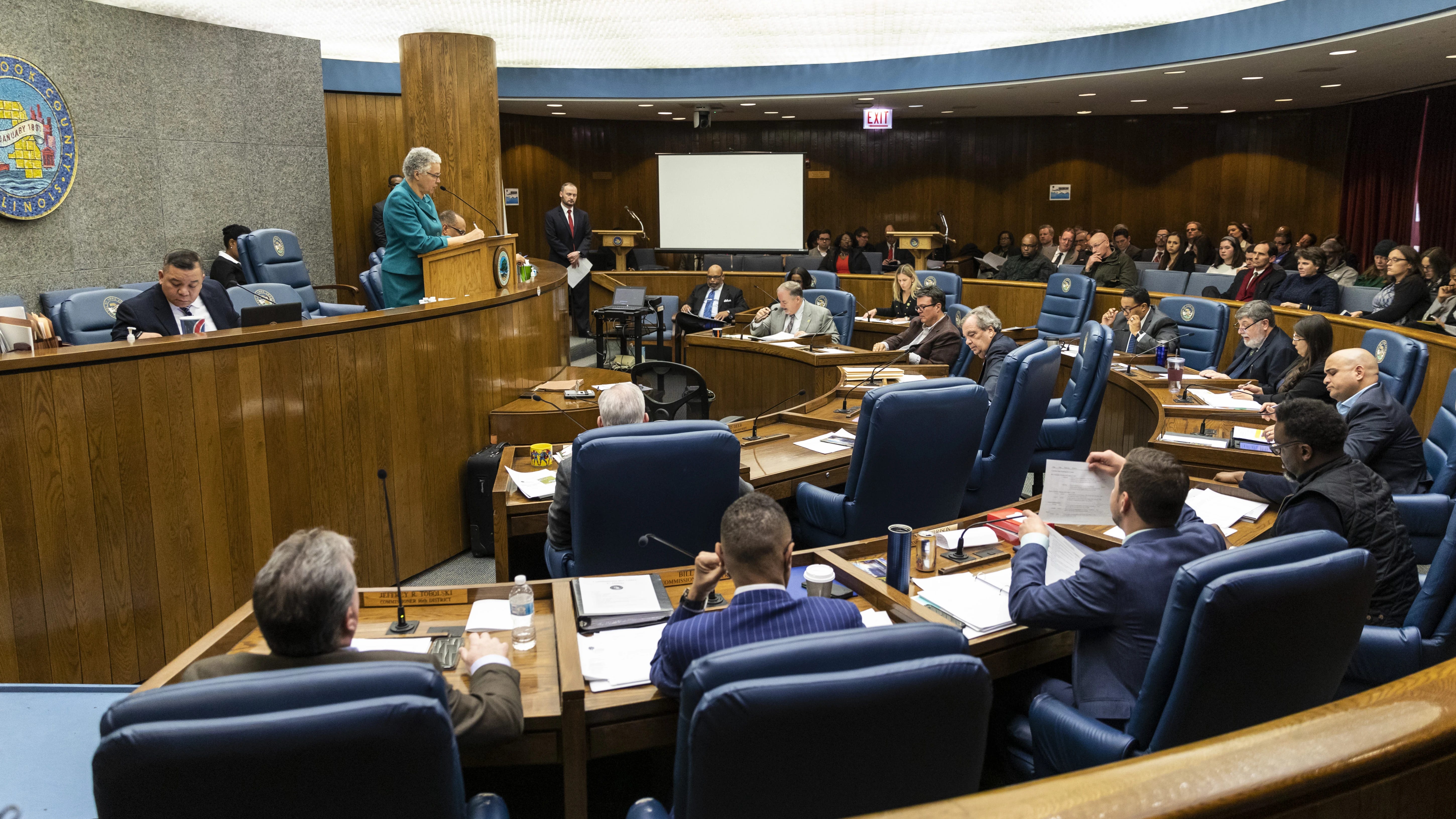
“We live in a state of constant surveillance and that technology, unfortunately, is not regulated,” Cook County Commissioner Alma Anaya said last week, of the measure taking effect in 60 days. “As county commissioners, it is our duty to protect residents from becoming the ever-evolving targets.”
In April, Oklahoma City officials amended the city’s contract with data broker Lexis Nexis, mandating that local police data only be shared with 14 local law enforcement agencies and nobody else, including ICE. Maryland adopted a new privacy protection law in July with similar data sharing limits, and the Massachusetts legislature is considering the same.
While the Cook County Sheriff doesn’t hold people in jail on ICE’s behalf, county jail data, including names, photos, charges and custody status, has still been finding its way to ICE.
Here’s how it is happening: the Cook County Sheriff’s office sends real-time booking and release data to Appriss, an Equifax-owned company that runs Illinois’ victim notification system known as VINE. VINE is valuable because it lets crime victims and their families sign up for an alert when a person accused of harming them is released, transferred or has a court date change.
The problem is the county’s contract allows Appriss to sell that same jail data to other companies, including LexisNexis, which has supplied ICE with jail booking data since 2021 under a contract that ultimately paid the company more than $24.5 million.
ICE makes millions of queries every year through the LexisNexis police data platform, the Accurint Virtual Crime Center, which thousands of local police departments use, many of them sanctuary cities. During a six-month period in 2021, ICE’s Chicago Field Office ran more than 13,000 searches in LexisNexis and generated about 1,800 reports, according to FinePrint, an investigative website focused on surveillance and policing.
The county’s new ordinance aims to block the data broker-to-ICE pipeline. Appriss will no longer be allowed to sell ‘live’ jail data to brokers like LexisNexis and Thomson Reuters. It is one of the first laws in the country that directly controls what a vendor does with data after the government hands it over.
The county’s vote came on the same day our De-ICE Action Network held a ‘Spotlight on LexisNexis’ webinar to educate local activists on the police data pipeline that ICE is exploiting thanks to LexisNexis and steps they can take to stop it. More than 500 people signed up.
Cook County closed its loophole because local advocates started asking questions. You can do the same where you live, whether you’re starting from scratch or already pushing your officials for answers.
Register for our Nov. 12 session at 9:15 a.m. ET to connect with other local advocates, discuss progress and challenges, and get advice from Shawn Segal of FinePrint.
The De-ICE Action Network is a volunteer-powered alliance holding ICE’s partners and profiteers accountable through peaceful, strategic action.
Peyton, this is HUGE. I’m so grateful for this post. Are you aware of any evidence of ALPR data being sold by companies like Flock to LexisNexis or other data brokers?